Enterprise AI Knowledge Assistant
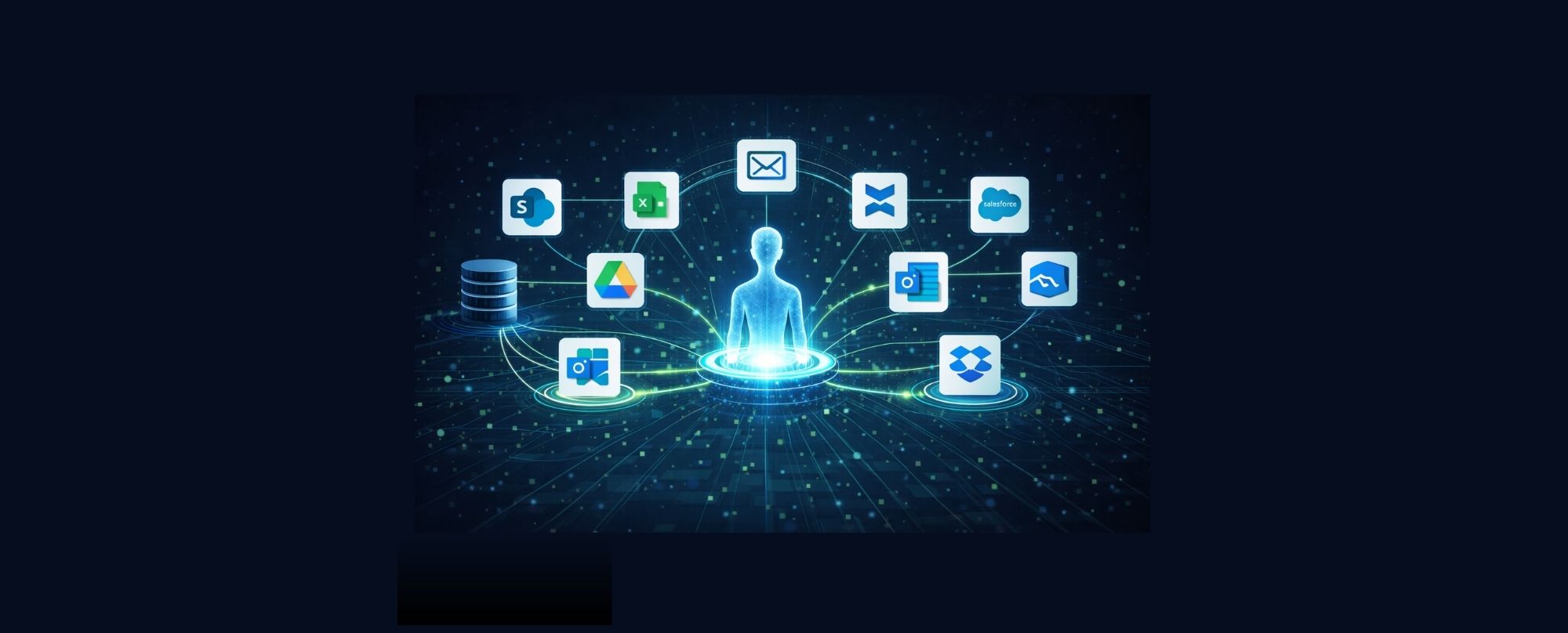
Operationalising Institutional Knowledge with AI through a structured discovery process, permission-aware retrieval architecture and a measurable MVP pilot design.
All metrics are pilot estimates.
Overview
This case study translates an ambiguous enterprise AI opportunity into a practical implementation blueprint. The objective was to help a consulting organisation unlock and operationalise institutional knowledge spread across proposals, delivery artefacts and legacy documentation.
The resulting design focuses on secure ingestion, semantic retrieval (RAG), and deployment into existing collaboration environments so teams can find and reuse internal knowledge faster without compromising governance.
Company Overview
Northbridge Advisory Group (fictional) is a 450-person professional services firm in Sydney, Melbourne and Brisbane, delivering digital transformation, ERP implementation, analytics and operational optimisation programs for enterprise and mid-market clients.
Business Context
Five years of rapid growth, service-line expansion and acquisitions created significant knowledge fragmentation. Valuable intellectual property existed across disconnected systems and individual repositories, making reuse inconsistent and slow.
- Knowledge spread across SharePoint, Google Drive, legacy Confluence, proposal archives and delivery documents
- No structured retrieval capability across repositories
- High dependency on informal expert networks to locate reusable content
Initial Problem Statement
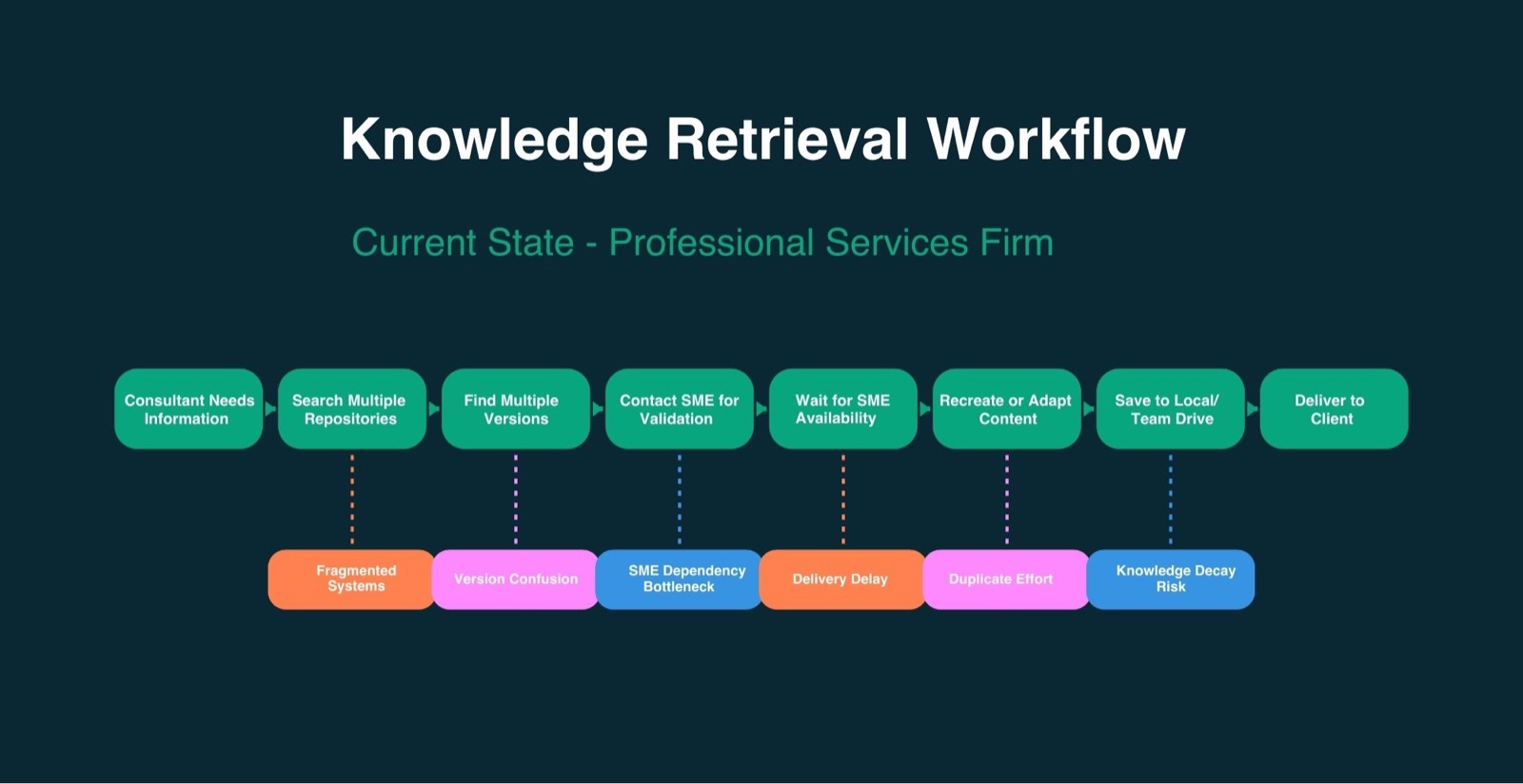
Leadership identified a large volume of valuable institutional IP but low practical reuse across bids and delivery. Teams were spending significant time searching, recreating content and escalating to SMEs rather than leveraging existing knowledge assets.
Observable Pain Points
- Proposal teams frequently recreated content from scratch
- Case studies and methodologies were difficult to locate quickly
- Consultants reinvented deliverables across engagements
- Critical IP risk increased when key employees exited
- Duplicate documentation persisted across multiple systems
Structured Discovery Framework
- Stakeholder discovery across sales, delivery, practice leads, knowledge management and IT/security
- Content landscape mapping: repositories, file formats, duplication and metadata maturity
- Workflow analysis for proposal development, delivery preparation and SME escalation patterns
- Risk and governance assessment: permissions, compliance, client confidentiality and data residency
This discovery phase reframed the challenge as a retrieval and governance problem, not only an automation problem.
Refined Problem Statement
The organisation lacked a structured, permission-aware capability for retrieving institutional knowledge across disconnected systems. This drove duplicated effort, inconsistent outputs, repeated SME interruptions and reduced delivery scalability.
AI Solution Architecture
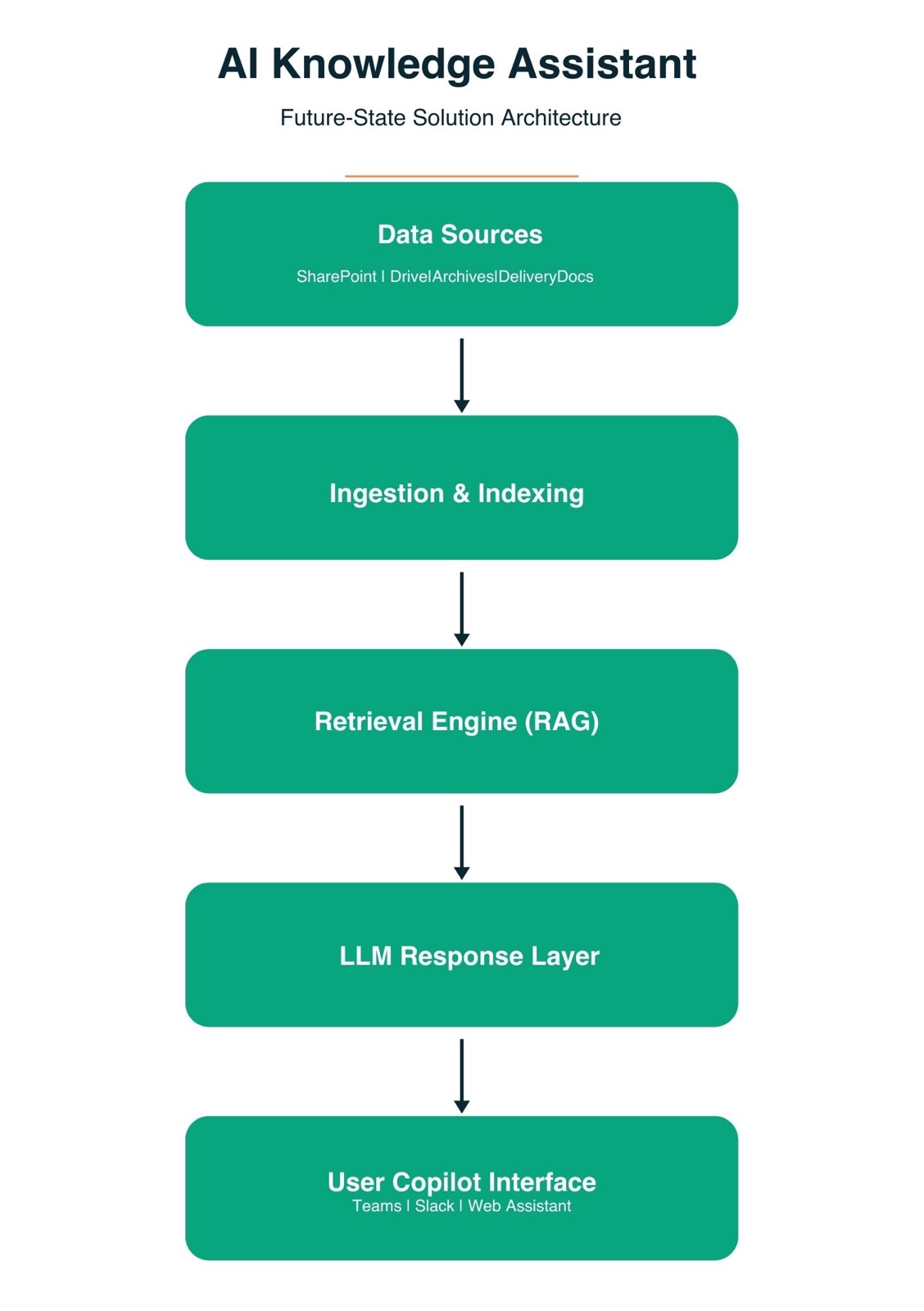
- Knowledge ingestion layer: secure connectors ingest approved repositories while preserving document permissions
- Processing and indexing layer: chunking and embeddings transform documents for semantic retrieval
- Retrieval layer (RAG core): context-grounded responses generated from retrieved internal sources
- Interaction layer: assistant delivered in Teams, Slack or secure web interface
- Governance and permission layer: role-based access, audit logging and compliance controls
MVP Pilot Design
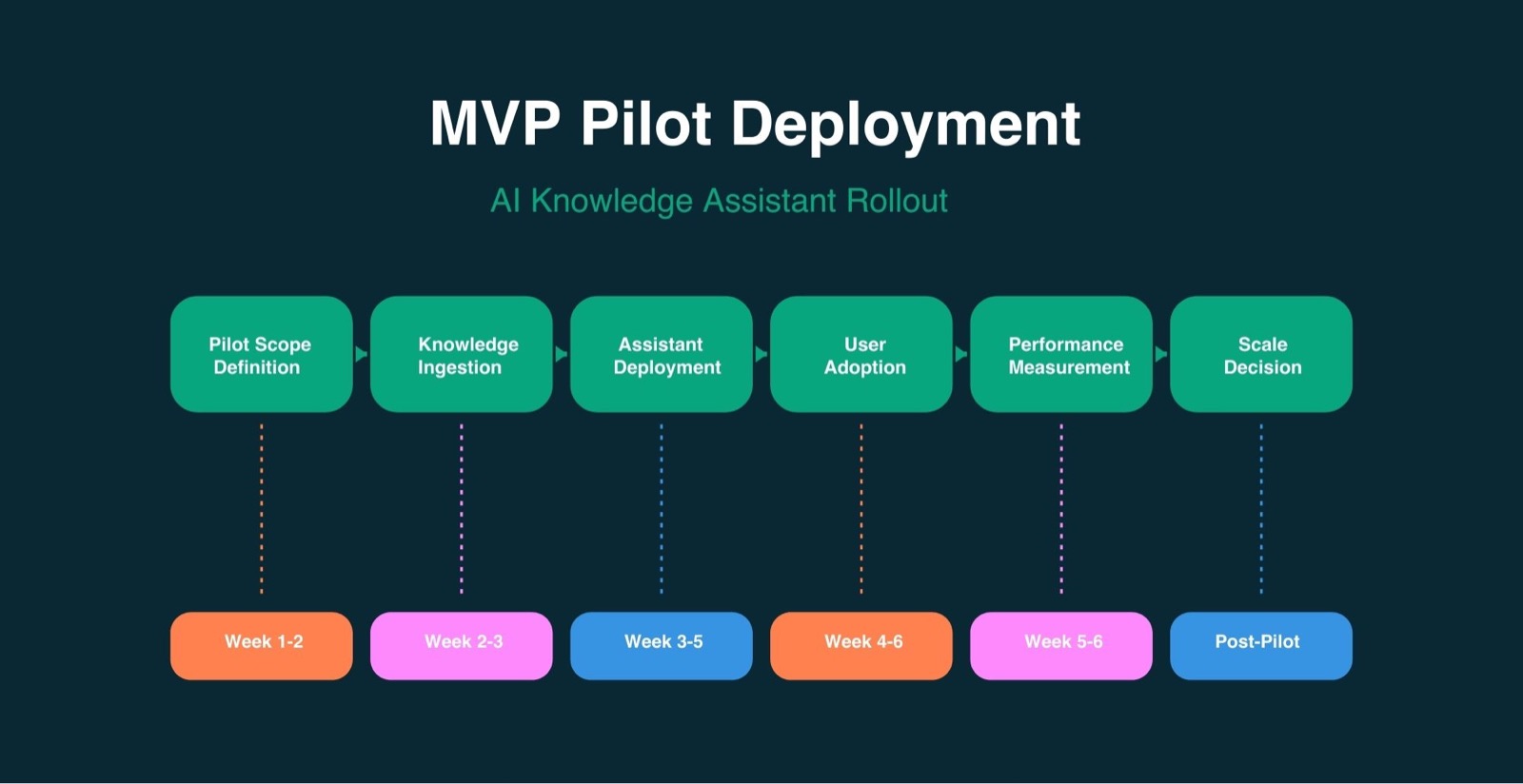
The rollout model was intentionally constrained to validate business value quickly while controlling risk.
- Single-function pilot scope (proposal or delivery preparation team)
- Curated ingestion of high-value assets: proposals, case studies and methodologies
- 10-20 pilot users in a secure internal environment
- Grounded responses with source-linked retrieval for trust and traceability
Success Metrics
- Reduction in time spent retrieving internal knowledge
- Faster proposal development cycle times
- Lower SME interruption frequency during bids
- Higher knowledge reuse rates across teams
- User adoption and satisfaction across the pilot cohort
Expected Business Outcomes
- 30-50% reduction in knowledge retrieval time
- Accelerated proposal turnaround
- Reduced dependency on individual SMEs
- Improved onboarding speed for new consultants
- Knowledge treated as a scalable organisational asset